
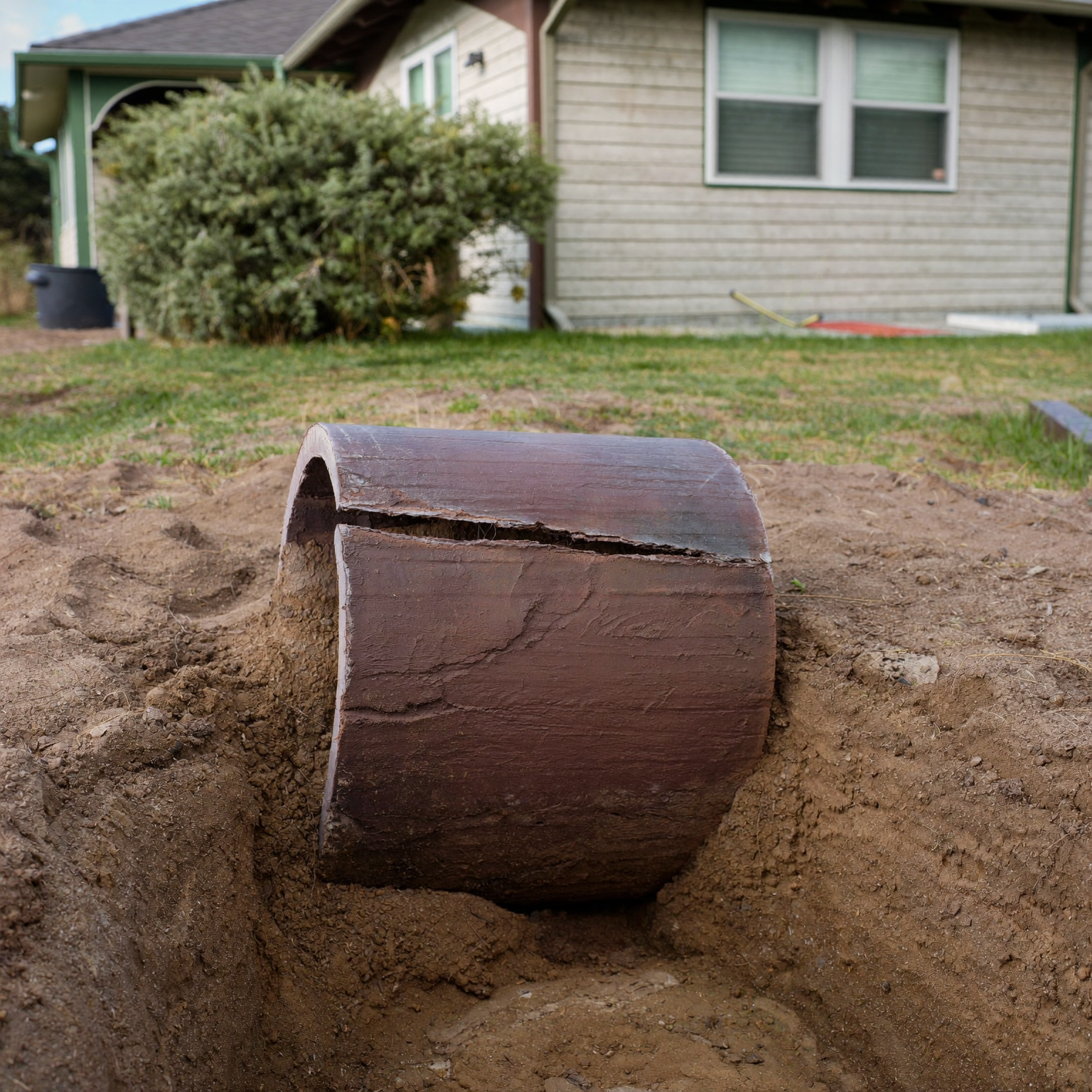
In Englewood, the property owner usually arranges sewer line repair for the private lateral, while Englewood Utilities handles a defect in the public sewer main. The key first step is to locate the failure and confirm ownership before excavation, lining, or replacement is authorized.
Start by identifying the responsible sewer line
A sewer problem inside an Englewood home can originate in a fixture branch, the building drain, the private sewer lateral, or the public main. Those locations may produce similar symptoms, including slow drainage, gurgling, sewage at a basement drain, or repeated backups. They do not have the same repair process or responsible party.
Our work in the Englewood plumbing and sewer service area begins with diagnosis rather than assumptions. We need to know where wastewater stops moving, where the damaged pipe sits, and whether that section belongs to the property owner or the utility.
Why Englewood properties require local context
Englewood includes older houses near South Broadway and Cushing Park, established homes around Belleview Park, postwar housing in Hampden Hills, and newer infill throughout the city. Remodels and additions can leave more than one generation of drainage material on the same property. The pipe under a basement floor may therefore differ from the pipe crossing the yard.
Build the repair around verified conditions
Once we know the defect location and ownership, we can choose a repair that addresses the structural problem. A cable clearing may restore flow through roots or debris, but it does not reconnect an offset joint or rebuild a collapsed pipe. Repair planning should rely on a clear view of the cleaned line whenever the pipe can be inspected safely.
What should an Englewood homeowner do next?
Before authorizing excavation, gather any previous sewer reports, repair invoices, property surveys, and cleanout information. Avoid running washing machines, dishwashers, showers, or other high-volume fixtures if sewage is already backing up. Keep people and pets away from contaminated areas.
The next practical steps are:
- Confirm whether several fixtures are affected or only one branch drain.
- Find the exterior or interior cleanout without forcing a damaged cap.
- Arrange for the sewer to be cleared if debris prevents a useful camera view.
- Record the defect and locate it from the surface.
- Confirm whether the marked section is private or public.
- Review permits, access, pipe material, and restoration before choosing a repair.
Our article on warning signs of sewer line failure can help separate an isolated fixture problem from symptoms involving the building sewer. If the cleanout location is unknown, our sewer cleanout identification guide explains where to look without treating every capped pipe as a sewer access point.