
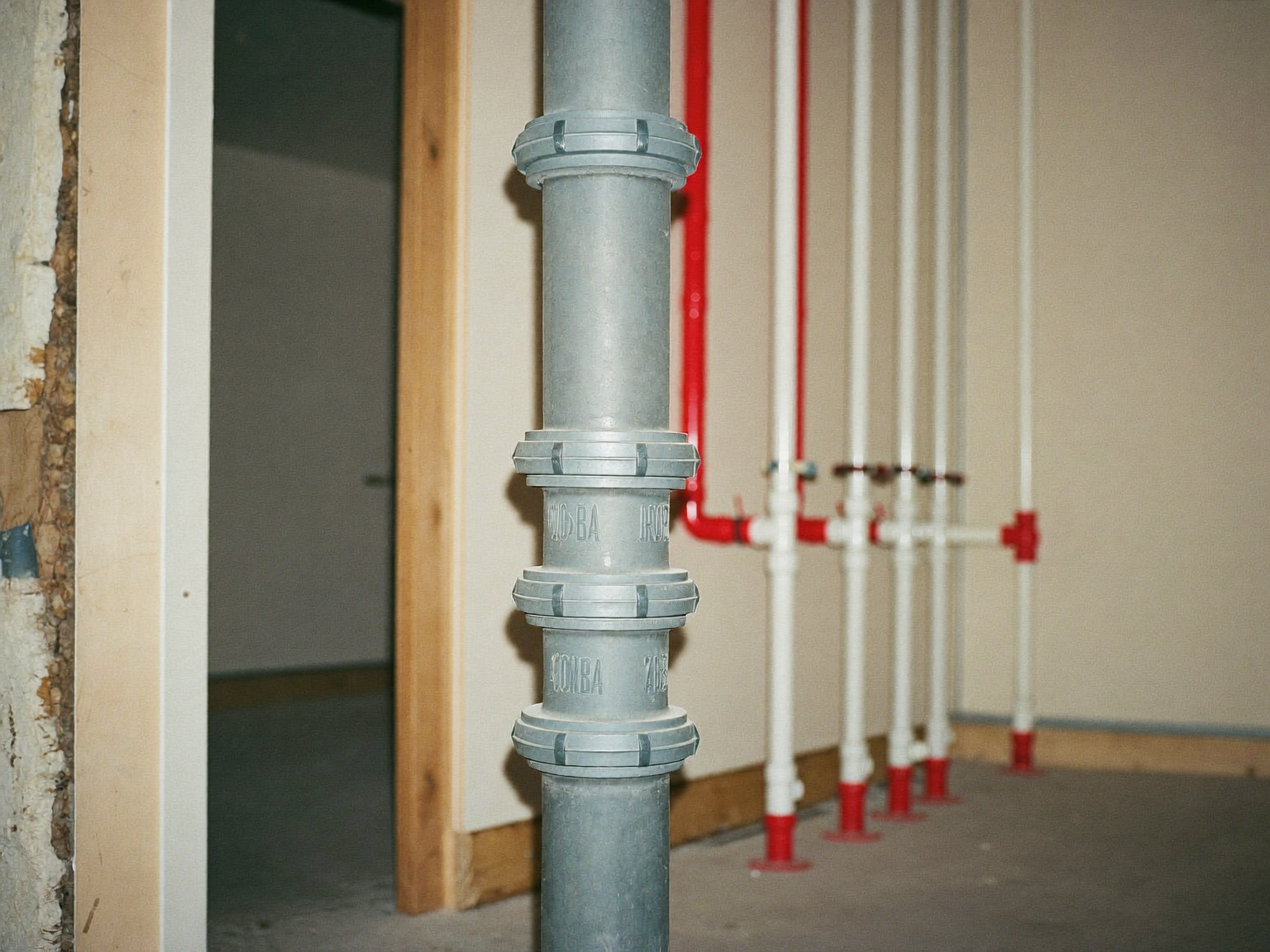
A Northglenn home needs polybutylene replacement when the material is confirmed and its condition, fittings, or leak history show that continued repairs are a poor long-term choice. We recommend inspecting the complete supply system before deciding because gray plastic pipe alone does not prove that an entire home contains polybutylene.
Why polybutylene requires a careful assessment
Polybutylene is a flexible plastic water-supply pipe used in many homes during an earlier period of residential construction and remodeling. It may appear gray, blue, black, or another muted color. The pipe can look normal from the outside even when deterioration is developing internally or around its fittings.
Homes across Northglenn plumbing service areas include ranch houses, split-level homes, townhomes, and later two-story construction. Plumbing may also reflect additions and remodeling completed long after the original home was built. That means pipe material can change between a basement, crawlspace, utility room, kitchen, and upper floor.
Our approach to polybutylene replacement in Northglenn starts with identification. We then trace where the material runs, inspect accessible connections, review previous leak locations, and determine whether the home has a complete polybutylene system or only isolated sections.
When does replacement make more sense than repair?
A small leak can sometimes be isolated and repaired. The larger question is whether the failed area represents a local problem or part of a supply system with similar pipe and connections throughout the home. Repeated repairs can leave inaccessible sections unchanged while adding more transition fittings.
A professional pipe replacement and repiping assessment should distinguish between an active plumbing emergency and a planned upgrade. An active leak requires prompt isolation. A dry system with confirmed polybutylene allows more time to document routes, compare materials, and coordinate access.
How is a Northglenn repipe planned?
A sound plan follows the home’s actual layout. We locate the main shutoff, water heater, fixture groups, basement ceiling routes, crawlspace access, plumbing chases, and remodeled areas. We also look for abandoned lines and fittings that should not remain pressurized.
In Original Northglenn homes, common floor plans may offer direct basement access to kitchens and bathrooms. Finished ceilings, slab sections, and upper-level fixtures can require different routing. In areas such as Fox Run and neighborhoods near Webster Lake, the same principle applies: the home’s construction and previous renovations determine access more than the neighborhood name alone.
How do Northglenn conditions affect the project?
Northglenn’s municipal water system serves local properties, but the plumbing after the service connection belongs to the building system. Water chemistry is only part of a polybutylene assessment. Installation quality, fitting design, heat exposure, mechanical stress, and prior repairs also affect how a system performs.
Front Range soils can contain expansive clay that moves as moisture conditions change. That concern is most relevant where piping passes through slabs, foundations, or poorly protected penetrations. Indoor repiping should allow appropriate movement and avoid rigid contact with framing or masonry.
What should happen before and after replacement?
Before work starts, homeowners should clear access around the water heater, shutoff, fixtures, crawlspace entrance, and planned wall openings. Valuable or moisture-sensitive belongings should be moved away from work zones. We also recommend discussing pets, alarm systems, parking, water shutoff timing, and any household need that affects when service can be interrupted.