
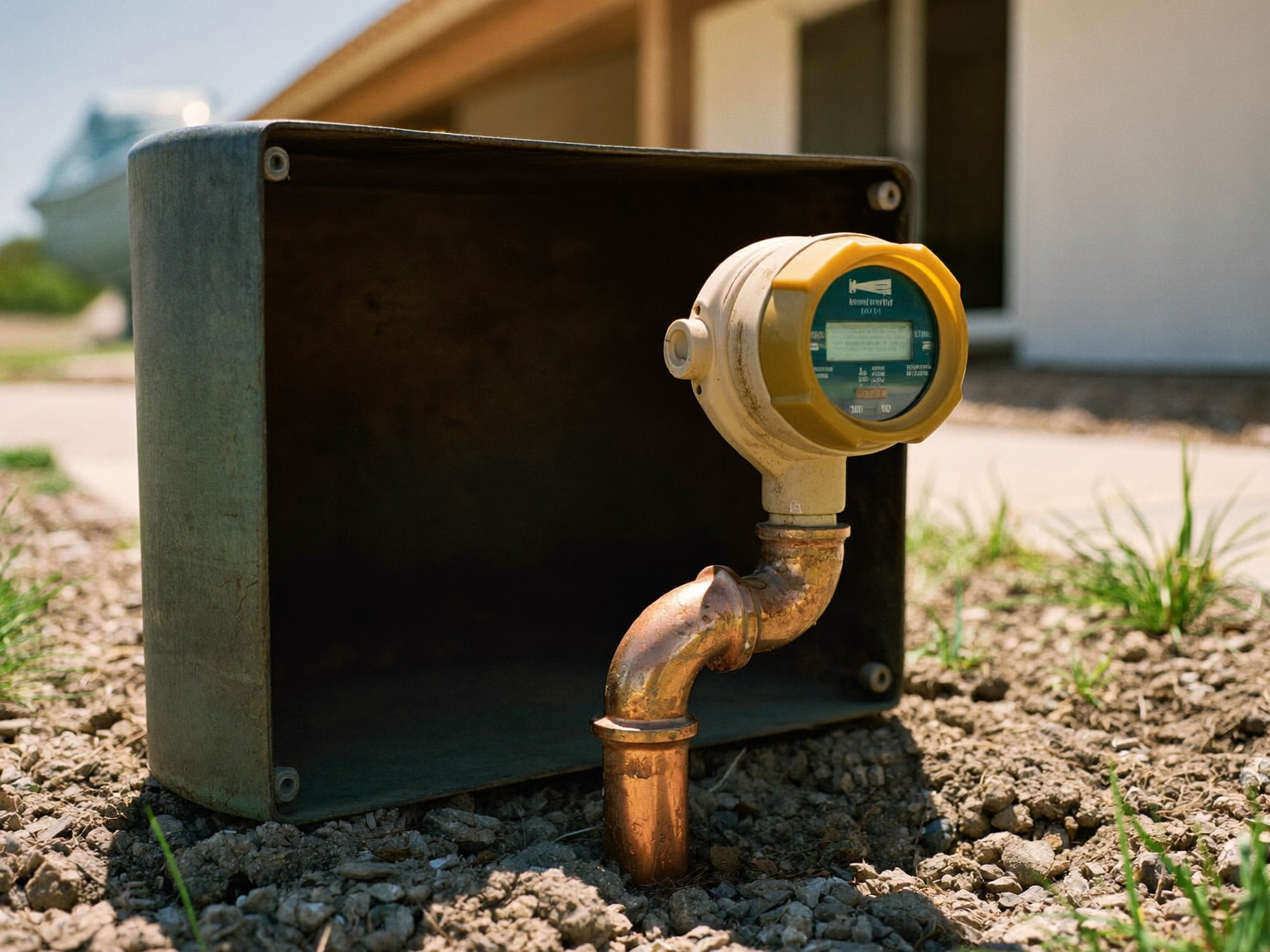
Yes. A water meter can guide Lakewood leak detection by confirming unexplained water flow and helping us narrow the affected plumbing zone. It cannot identify the exact failure by itself, so we combine meter evidence with fixture isolation, pressure testing, and targeted inspection.
For homeowners, the meter is useful because it evaluates flow through the main domestic water supply. If every known water-using fixture and appliance is off but the meter still shows flow, water may be escaping from a toilet, appliance connection, irrigation branch, service line, or concealed indoor pipe.
That is a starting point, not a diagnosis. Meter configurations vary among Lakewood water providers, and intermittent leaks may not appear during a brief check. Our work throughout the Lakewood plumbing service area accounts for the property layout, water provider, pipe materials, and location of the meter and shutoff valves.
What can the water meter actually reveal?
A water meter records water passing from the provider’s system into the property’s plumbing. Watching it under controlled conditions can answer an important question: is water moving when the property should be quiet? The test can also help us determine whether flow stops after an irrigation valve, fixture supply, water heater connection, or building shutoff is isolated.
How do we narrow the leaking zone?
We work from broad evidence toward a smaller test area. That approach avoids opening finished surfaces based only on a stain or damp floor. Water can travel along framing, pipe penetrations, concrete joints, and insulation before it becomes visible.
The process may begin with the meter and main shutoff. We then consider fixture stops, appliance supplies, irrigation controls, exterior hose connections, and the water heater. The exact sequence depends on which valves operate safely and how the house was piped.
Why does the Lakewood property matter?
Lakewood does not have one uniform housing type or one plumbing layout. A ranch near Morse Park may present different access and pipe history than a townhome near Belmar or a hillside property around Green Mountain. Additions and remodels can also leave several generations of plumbing in the same building.
Water service is similarly varied. Lakewood properties are served through a patchwork of water providers and special districts, including areas associated with Consolidated Mutual Water Company and Denver Water. Meter style, ownership boundaries, shutoff responsibility, and service-line arrangements can differ. We identify the provider and visible plumbing layout before operating exterior equipment.
What happens after the meter test?
Meter testing tells us where to focus. It does not justify cutting a wall at the first visible stain. Depending on the evidence, we may use pressure testing, acoustic listening, moisture mapping, thermal observations, or direct inspection of accessible piping. Each method answers a different question.
Our broader guide to how professionals find hidden leaks in Denver explains the role of these tools. Homes with suspected leaks beneath concrete require a different process, which is covered in our discussion of slab leak detection in Boulder-area homes. In Lakewood, we select the method based on construction, pipe route, surface materials, and whether the leak is continuous or intermittent.
What information should you gather before a visit?
Useful observations include when the symptom began, whether it changes when fixtures run, and whether the meter moves when the property is quiet. Note recent plumbing, appliance, irrigation, roofing, or remodeling work. Identify the water provider if known, but do not delay service if that information is unavailable.
Photos of stains and damp areas can show how the condition changed. It also helps to clear access to the water heater, main shutoff, crawlspace entrance, mechanical room, and affected fixture. Do not remove flooring or drywall solely to help with diagnosis. Preserving the area often gives us better moisture evidence.
How do we reach Lakewood from Westminster?
Drive time from our Westminster shop is not fixed. Traffic, weather, and the part of Lakewood involved all affect the route. Calls near Applewood may be approached differently from properties near Belmar, Green Mountain, or Bear Creek. Wadsworth Boulevard, Kipling Street, Sheridan Boulevard, and US Route 6 are common corridors, but current road conditions guide dispatch.
We also serve nearby communities, including the Wheat Ridge plumbing service area. That local coverage helps us plan routes without pretending every Lakewood address has the same travel time or access conditions.