
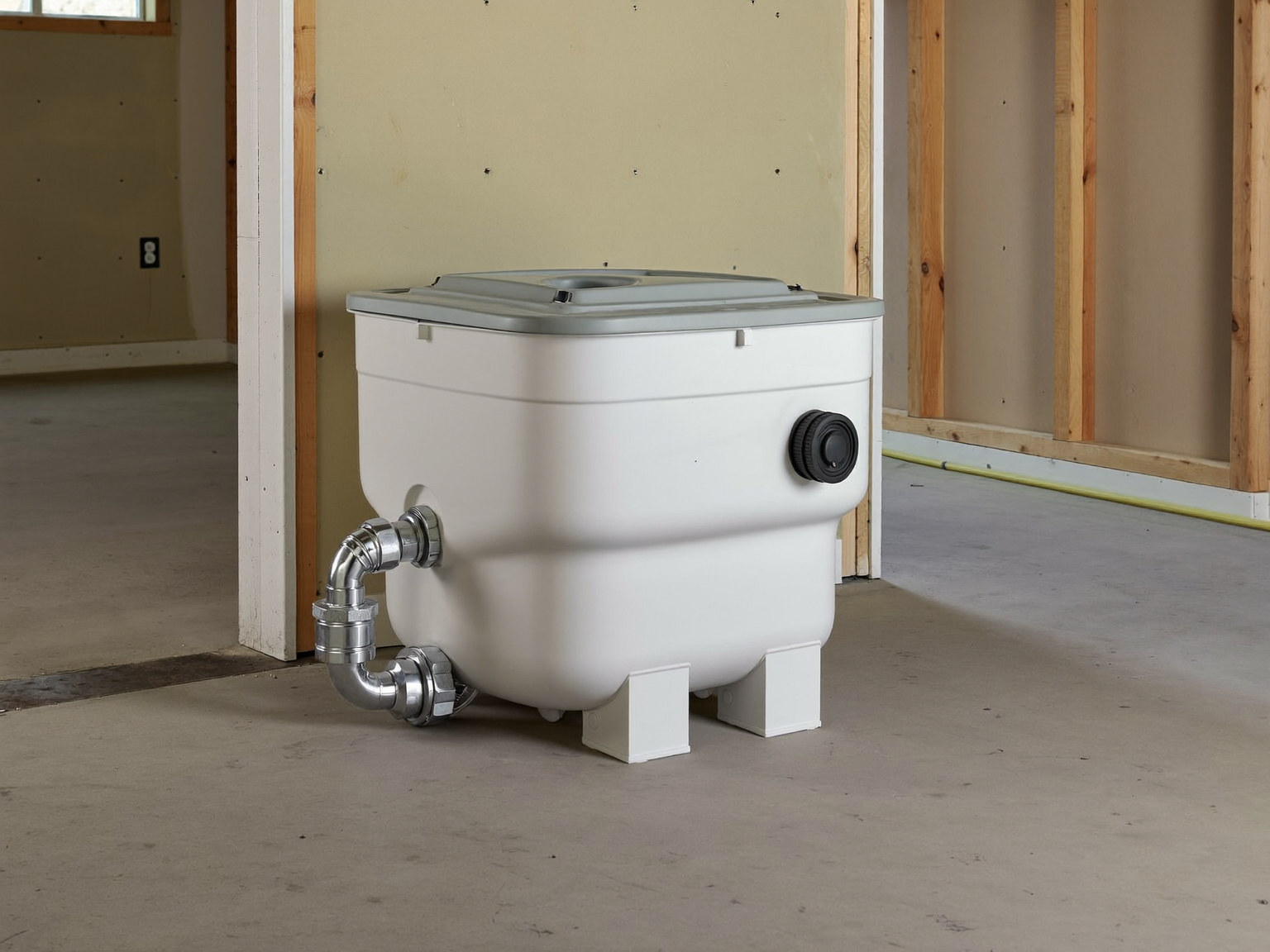
Your Erie home may need sump pump installation if groundwater, snowmelt, or storm runoff repeatedly collects beneath the basement or crawlspace. We first confirm where the water comes from, because a sump pump will not correct a leaking pipe, failed water service, sewer backup, or poor exterior grading by itself.
For homeowners in our Erie plumbing service area, the decision depends on the foundation, lot drainage, soil, existing perimeter drain, and safe discharge options. A professional assessment should connect those conditions into one system rather than treating the pump as a stand-alone appliance.
When a sump pump makes sense in Erie
Erie includes older homes near Old Town, established properties in Erie Village, and newer construction in communities such as Vista Ridge, Colliers Hill, Erie Commons, and Flatiron Meadows. These homes do not all manage subsurface water in the same way. Foundation type, construction era, grading, and drainage infrastructure matter more than the age of the neighborhood alone.
How we plan an Erie sump pump installation
A useful sump system has to collect water, activate reliably, discharge it safely, and remain accessible for service. Dropping a pump into an improvised container does not address those requirements.
Local utilities, neighborhoods, and access
Town of Erie Utilities serves municipal water and wastewater customers, while some developments also have metropolitan districts involved in neighborhood infrastructure or drainage. Private sump pumps remain the property owner's equipment. Homeowners should check their utility account, district documents, and association rules when a proposed discharge route could affect common drainage or exterior areas.
What affects installation scope?
The scope depends on whether the home already has a functional basin and drain system. A pump replacement in a sound pit is different from creating a new collection point through a concrete slab. Other factors include excavation conditions, access, electrical work, discharge length, exterior penetration, freeze protection, backup equipment, alarms, permits, and restoration of finished surfaces.